
What Is Audience Targeting and Its Benefits?
A Complete Guide for Business Growth
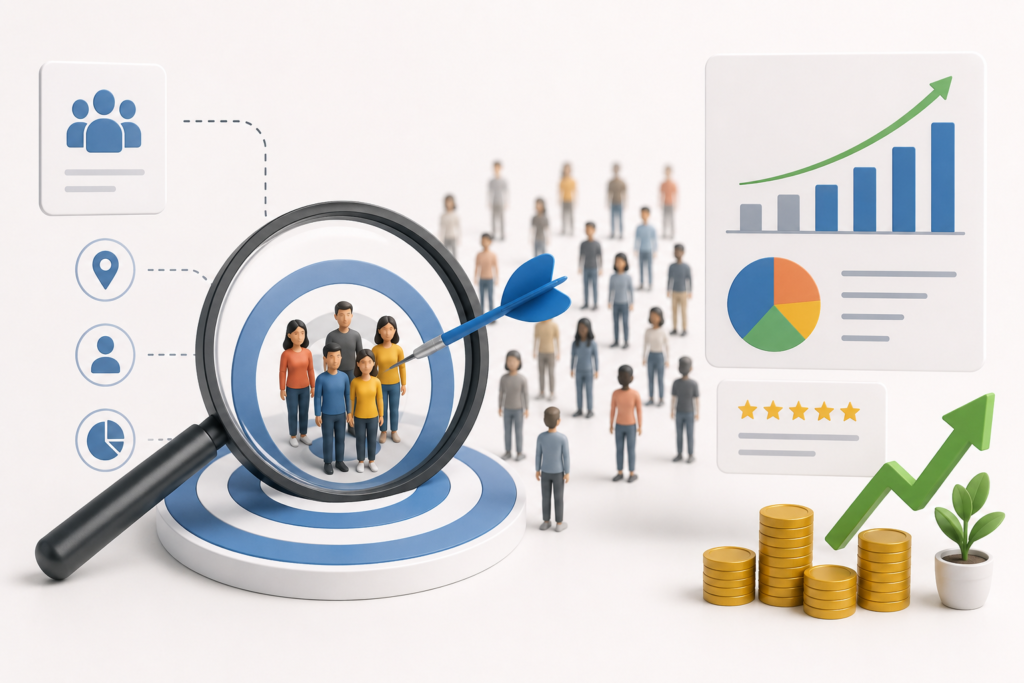
Audience targeting helps businesses share the right message with the right people. Instead of showing ads to everyone, businesses focus on people who are more likely to buy their products or services. As a result, they spend less money, get better marketing results, and give customers a better experience.
Whether you own a small business or a large company, audience targeting can help you reach the right customers and grow your sales. In this guide, you will learn what audience targeting is, why it is important, its benefits, the different types, and how to use it to improve your marketing.
What Is Audience Targeting?
Audience targeting means finding and reaching the people who are most likely to be interest in your products or services. Businesses use details like age, location, interests, shopping habits, and online activity to create marketing campaigns that match what customers need.
Instead of showing the same advertisement to everyone, audience targeting helps businesses share the right content with people who are more likely to be interest. As a result, more people engage with the content, and the chances of getting sales or leads increase.
For example, a sports shoe company may show its ads to people between 18 and 35 years old who enjoy running or exercising. Since these people like sports and fitness, they are more likely to buy running shoes than people who are not interest in these activities.
Why Is Audience Targeting Important?
Without audience targeting, businesses often waste time and money because many people who see their ads are not interest in the products or services. As a result, the marketing campaign becomes less effective and brings fewer sales.
Audience targeting allows businesses to:
- Reach the right customers.
- Increase return on investment (ROI).
- Improve customer satisfaction.
- Build stronger relationships.
- Create personalized marketing campaigns.
- Generate more qualified leads.
- Increase sales and business growth.
When businesses understand their customers, they can create messages that solve their problems and meet their needs. As a result, customers are more likely to trust the brand and make a purchase.
Benefits of Audience Targeting
1. Better Marketing Results
Audience targeting helps businesses show the right ads to people who are interest in their products or services. As a result, these ads get more clicks, better engagement, and more sales than ads show to everyone.
2. Higher Return on Investment (ROI)
Marketing works better when businesses focus on the right audience. As a result, they spend less money showing ads to people who are not interest in buying their products or services.
3. Improved Customer Experience
Customers like seeing products and services that match their interests. Therefore, personalized ads feel more useful, more relevant, and less annoying than general advertisements.
4. Increased Conversion Rates
People who are already interest in your products or services are more likely to become customers. As a result, audience targeting helps turn more website visitors into paying customers.
5. Stronger Brand Awareness
When businesses share the right message with the right people again and again, customers start to trust the brand. As a result, they are more likely to remember the business and choose it when they need a product or service.
6. Better Customer Loyalty
When businesses understand what their customers need, they can offer products and services that solve real problems. As a result, satisfied customers are more likely to come back and buy again in the future.
7. Reduced Advertising Costs
Audience targeting helps businesses avoid spending money on people who are not likely to buy their products or services. As a result, marketing campaigns work better and businesses save money by reducing unnecessary advertising costs.
8. Higher Engagement
When people see content that matches their interests, they are more likely to like, comment, share, and interact with it. As a result, businesses get better engagement and improve their social media performance.
9. Better Decision Making
Audience data helps businesses understand how customers think and behave. As a result, they can improve their products, set better prices, and create more effective marketing strategies.
10. Competitive Advantage
Companies that understand their audience often perform better than competitors using general marketing strategies.
Types of Audience Targeting
Demographic Targeting
Demographic targeting focuses on customer characteristics such as:
- Age
- Gender
- Education
- Occupation
- Income
- Family size
Businesses use demographic information to create suitable marketing campaigns.
Geographic Targeting
Geographic targeting focuses on customer locations.
Examples include:
- Country
- State
- City
- Postal code
- Climate
- Local language
Local businesses often use geographic targeting to attract nearby customers.
Behavioral Targeting
Behavioral targeting studies customer actions.
Examples include:
- Website visits
- Purchase history
- Product searches
- Mobile app usage
- Shopping habits
- Email engagement
Behavioral targeting helps businesses understand customer interests.
Interest-Based Targeting
Businesses group customers based on hobbies and interests.
Examples include:
- Fitness
- Technology
- Fashion
- Food
- Gaming
- Travel
This approach improves advertisement relevance.
Psychographic Targeting
Psychographic targeting focuses on:
- Lifestyle
- Values
- Personality
- Opinions
- Attitudes
This method creates deeper emotional connections with customers.
Contextual Targeting
Contextual targeting displays advertisements based on webpage content.
For example, a cooking equipment company may advertise on recipe websites.
Remarketing
Remarketing helps businesses reach people who have already visited their website or interacted with their business but did not buy anything. This reminds potential customers about the products or services and encourages them to return.
These campaigns remind potential customers to come back and finish their purchase. As a result, businesses have a better chance of turning visitors into customers.
How Audience Targeting Works
Audience targeting follows several simple steps.
Step 1: Understand Your Customers
Learn about your customers by using surveys, website data, customer feedback, and purchase history. This information helps you understand their needs and buying habits.
Step 2: Create Customer Personas
Develop detailed customer profiles including:
- Age
- Interests
- Challenges
- Buying habits
- Goals
Step 3: Segment Your Audience
Divide your customers into smaller groups based on similar interests, needs, or behaviors. This makes it easier to create marketing messages for each group.
Step 4: Create Personalized Content
Create advertisements, emails, videos, and blog posts that match the needs and interests of each audience group. As a result, your marketing becomes more personal and effective.
Step 5: Choose the Right Marketing Channels
Different audiences use different platforms.
Examples include:
- Google Search
- YouTube
- Email marketing
Step 6: Measure Campaign Performance
Track important metrics such as:
- Click-through rate (CTR)
- Conversion rate
- Cost per click (CPC)
- Return on investment (ROI)
- Customer engagement
Examples of Audience Targeting
Example 1: Clothing Store
A fashion brand may target women between 20 and 35 years old who enjoy online shopping and follow the latest fashion trends.
The advertisements show the latest seasonal clothing collections.
Example 2: Restaurant
A local restaurant may target people who live or work within 10 kilometers of its location. This helps the restaurant reach nearby customers who are more likely to visit.
The advertisements highlight special lunch offers during business hours to attract more nearby customers.
Example 3: Online Course
An online education company may target college students who want to learn programming or improve their coding skills.
The campaign promotes easy-to-understand coding courses for beginners, making it simple for new learners to get start.
Example 4: Fitness Center
A gym targets adults interested in weight loss and healthy living.
Advertisements promote free trial memberships.
Best Practices for Successful Audience Targeting
Know Your Ideal Customer
Learn about your customers’ needs before creating advertisements. This helps you make ads that are more useful and relevant.
Use Reliable Data
Collect correct information from trusted sources, such as website analytics, CRM software, and customer surveys. This helps you understand your audience and make better marketing decisions.
Create Valuable Content
Focus on solving your customers’ problems instead of only promoting your products or services. As a result, people are more likely to trust your business.
Test Different Campaigns
Try different headlines, images, and advertisements to see which ones get the best results. This helps you improve your marketing over time.
Update Audience Segments Regularly
Customer interests can change over time. Therefore, updating your audience groups regularly helps improve your marketing results and reach the right people.
Personalize Marketing Messages
Personalized content helps businesses build stronger relationships with their customers. As a result, customers are more likely to trust the brand and stay loyal.
Monitor Results
Check your campaign results regularly and use the data to make improvements. This helps you create better marketing campaigns over time.
Common Audience Targeting Mistakes
Many businesses reduce campaign performance by making avoidable mistakes.
Common mistakes include:
- Targeting everyone.
- Ignoring customer research.
- Using outdated customer data.
- Creating generic advertisements.
- Not testing campaigns.
- Focusing only on new customers.
- Ignoring mobile users.
- Failing to measure campaign results.
Ignoring these mistakes helps businesses change marketing performance.
Audience Targeting in Digital Marketing
Audience targeting plays an important role in modern digital marketing.
It supports:
- Search Engine Optimization (SEO)
- Google Ads
- Social Media Marketing
- Email Marketing
- Content Marketing
- Video Marketing
- Influencer Marketing
- Display Advertising
Every successful digital marketing campaign begins with understanding the target audience.
Tools Used for Audience Targeting
Several digital marketing tools help businesses identify and understand their audience.
Popular tools include:
- Google Analytics
- Google Ads Audience Manager
- Meta Ads Manager
- LinkedIn Campaign Manager
- HubSpot
- Mailchimp
- SEMrush
- Ahrefs
These tools help businesses understand their customers better and change their marketing campaigns. As a result, they can make smarter decisions and achieve better results.
Future of Audience Targeting
Audience targeting continues to change as new technologies are develop. As a result, businesses can reach the right customers more effectively.
Artificial intelligence (AI), machine learning, and predictive analytics help businesses understand customer behavior more accurately. At the same time, privacy-focused marketing and first-party data are becoming more important because businesses must follow changing data privacy rules.
Companies that spend time understanding their audience and creating personalized marketing can build stronger customer relationships. As a result, they can grow their business and achieve long-term success.
Conclusion
Audience targeting is one of the best ways to improve digital marketing. Instead of showing ads to everyone, businesses focus on people who are most likely to become customers. As a result, they get more engagement, spend less on advertising, keep customers happier, and earn a better return on their investment.
Whether you use SEO, social media marketing, email marketing, or paid ads, audience targeting helps you share the right message with the right people at the right time. By understanding your customers and creating personalized marketing campaigns, you can build a stronger brand, attract quality leads, and grow your business over time. Follows up Instagram and Facebook for more updates.
Frequently Asked Questions (FAQs)
What is audience targeting?
Audience targeting is the process of reaching people who are most likely to be interest in your products or services. Businesses choose these people based on factors such as their age, location, interests, and online behavior.
What are the main benefits of audience targeting?
Audience targeting helps businesses get more sales, spend less on advertising, increase customer engagement, share personalize content, and earn a better return on their marketing investment (ROI).
What are the different types of audience targeting?
The main types of audience targeting are demographic, geographic, behavioral, psychographic, interest-base targeting, and remarketing. Each type helps businesses reach the right customers in a different way.
How does audience targeting improve digital marketing?
Audience targeting changes digital marketing by showing the right ads and content to the right people. As a result, businesses get more clicks, increase sales, improve customer satisfaction, and make their marketing campaigns more successful.
Which tools can businesses use for audience targeting?
Businesses use tools like Google Analytics, Google Ads Audience Manager, Meta Ads Manager, Mailchimp, SEMrush, and Ahrefs to understand audiences better. As a result, they can create more effective marketing campaigns.


