
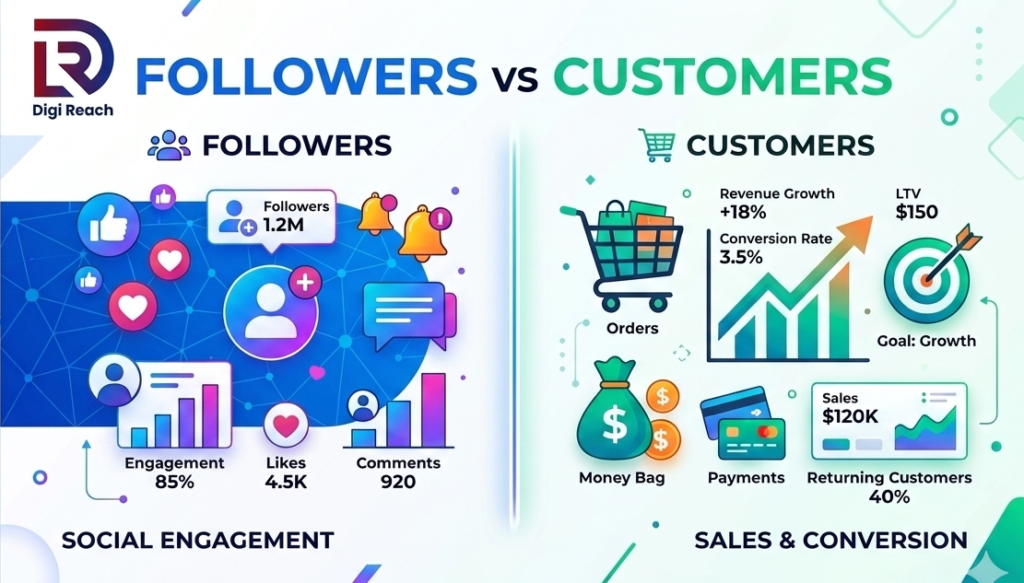
Followers vs Customers: What’s Your Real Goal?
Getting thousands of followers can feel like a big digital marketing win. However, followers alone do not always mean your business is growing.
A social media account may have 10,000 followers but generate very few enquiries or sales. On the other hand, a business with a smaller audience can attract loyal customers and generate strong revenue.
So, what should your business really focus on: followers or customers?
The answer is simple: followers can build visibility, but customers drive business growth.
Why Do Businesses Focus So Much on Followers?
Followers are easy to notice and compare. A growing follower count can make a brand look popular and successful.
More followers can help you:
- Increase brand awareness
- Build a larger audience
- Improve social proof
- Reach more potential customers
- Create opportunities for engagement
- Strengthen your online presence
However, follower numbers are only one part of your digital marketing strategy.
If your followers never visit your website, contact your business, request a quote, or purchase your services, a high follower count may not have much business value.
Followers vs Customers: Understanding the Difference
The key difference is intent.
A follower may simply enjoy your content, find it interesting, or want to stay updated. A customer has a stronger intention to solve a problem by purchasing your product or service.
For example, imagine a local dental practice has 5,000 Instagram followers. If only a small number of people book appointments, the follower count does not tell the complete story.
Another dental practice may have 1,500 followers but get regular enquiries and bookings from social media. This means the second account may be performing better and bringing better business results.
That is why businesses should look beyond vanity metrics and focus on meaningful results.
Are Followers Still Important?
Yes. Followers still have value.
A relevant and engaged audience can help your business create long-term visibility. Your followers may also become future customers when they need your product or service.
The important point is to attract the right followers, not simply more followers.
For example, 1,000 followers who are interested in your business can be more valuable than 10,000 inactive or unrelated followers.
Focus on:
- Audience relevance
- Engagement
- Website traffic
- Leads
- Enquiries
- Bookings
- Sales
- Customer retention
These metrics provide a clearer picture of marketing performance.
How to Turn Followers Into Customers
Building an audience is just the beginning. Your next goal should be creating a clear path that turns social media visitors into customers.
1. Create Content That Solves Problems
Do not post only to stay active.
Create useful content that answers real customer questions, explains solutions, and addresses common problems.
Educational content can help build trust before someone is ready to buy.
2. Use Clear Calls to Action
Tell your audience what to do next.
For example:
- Visit our website
- Book a consultation
- Request a quote
- Send us a message
- Call us today
- Learn more about our service
A clear CTA can turn passive attention into meaningful action.
3. Build Trust Before Asking for a Sale
Customers usually need confidence before making a purchase.
Use social media to showcase:
- Customer reviews
- Testimonials
- Case studies
- Before-and-after results where appropriate
- Expert advice
- Behind-the-scenes content
- Frequently asked questions
Trust-building content can help move potential customers closer to a buying decision.
4. Connect Social Media With Your Website
Your social media profile should not work in isolation.
Make sure your website provides a smooth next step. Your landing pages should clearly explain your services, benefits, pricing information where appropriate, and contact options.
This creates a stronger customer journey:
Social Media → Website → Enquiry → Conversion → Customer
What Metrics Should You Track?
Instead of looking only at follower growth, track metrics that connect marketing activity with business outcomes.
Important metrics include:
Engagement Rate: Are people interacting with your content?
Website Traffic: Are social media users visiting your website?
Leads: Are people submitting forms, calling, or sending enquiries?
Conversion Rate: How many visitors become leads or customers?
Cost Per Lead: How much are you spending to generate each lead?
Sales: Is your marketing contributing to revenue?
Customer Lifetime Value: How much value does a customer create over time?
These numbers can give you a much clearer view of your digital marketing performance.
The Real Goal Is Business Growth
Followers are not useless. They are simply not the final goal for most businesses.
Your social media strategy should support bigger objectives such as:
Visibility → Trust → Engagement → Leads → Customers → Growth
When your content attracts the right audience and guides them towards taking action, social media becomes more than a platform for collecting likes and followers.
It becomes a powerful part of your customer acquisition strategy.
Followers or Customers: What Should You Choose?
You do not necessarily have to choose one over the other.
The best approach is to build a relevant audience while creating a clear path to conversion.
Think of followers as potential customers. Your plan should help move them from awareness to consideration and, eventually, action.
A smaller but interact audience that consistently generates enquiries can be more valuable than a large audience with little buying intent.
Conclusion
In the followers vs customers debate, the real goal should be bigger than follower numbers.
Followers can increase visibility and create ways. However, customers generate revenue and support sustainable business growth.
If your social media plan focuses only on getting followers, it may be time to rethink your goals. Focus on reaching the right audience, sharing useful content, building trust, and turning attention into real business results.
At DigiReach, we help businesses create strategic digital marketing campaigns focused not just on visibility, but on meaningful growth, leads, and conversions.
Follow up Instagram and Facebook for more information.


