
Traditional Marketing vs Digital Marketing: Which Is Better for Your Business?
Marketing is important for helping businesses attract customers, build awareness, and increase sales. However, the way businesses reach their customers has changed a lot over the years.
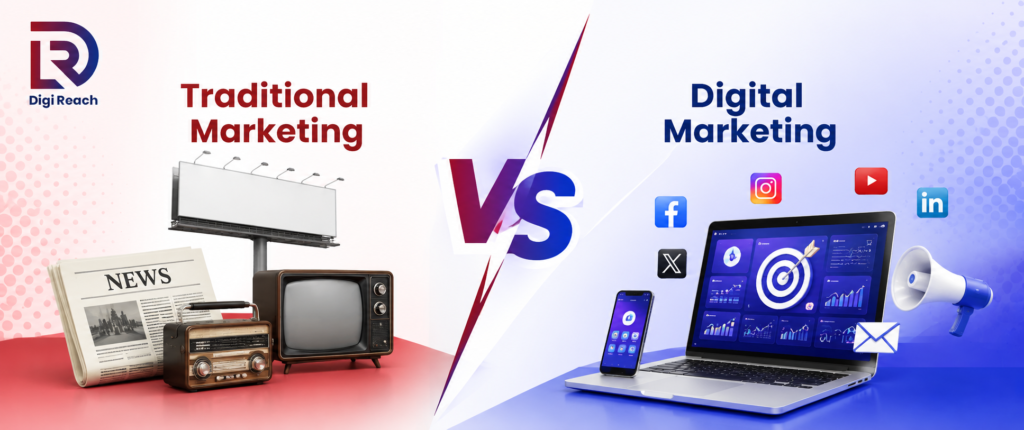
Traditional marketing uses channels like TV, newspapers, radio, billboards, flyers, and direct mail. Digital marketing uses online channels like search engines, social media, websites, email, and online ads.
So, traditional marketing vs digital marketing—which one is better for your business?
The right choice depends on your audience, goals, budget, and industry. Knowing the difference can help you choose the best strategy and get better results.
What Is Traditional Marketing?
Traditional marketing means using advertising methods that were popular before the internet became common. These methods usually reach people through offline channels.
Common examples include:
- Television advertisements
- Radio advertising
- Newspaper and magazine ads
- Billboards and outdoor advertising
- Flyers and brochures
- Direct mail
- Business cards
- Event and trade show marketing
Traditional marketing can still work well for businesses that want to reach a local or broad offline audience.
For example, a local business may use newspaper advertising, posters, or billboards to increase awareness in a specific area.
What Is Digital Marketing?
Digital marketing means promoting a business through the internet and online platforms. It helps businesses reach the right audience and track how people respond to their marketing campaigns.
Popular digital marketing methods include:
- Search engine optimisation (SEO)
- Social media marketing
- Google Ads and paid search
- Content marketing
- Email marketing
- Video marketing
- Influencer marketing
- Website marketing
- Local SEO
Digital marketing has become increasingly important because customers often search online before making a purchasing decision.
For example, someone looking for a dentist, restaurant, marketing agency, or beauty clinic may search on Google before choosing a business.
Traditional Marketing vs Digital Marketing: Key Differences
Understanding the differences between traditional and digital marketing can help you decide where to invest your marketing budget.
1. Audience Reach
Traditional marketing can reach many people through TV, radio, newspapers, and outdoor ads. However, it can be harder to reach a specific audience.
Digital marketing helps businesses reach specific people based on their location, interests, behaviour, age, and what they are searching for.
Winner: Digital marketing for targeted reach.
2. Cost
Traditional advertising can be expensive, especially when businesses use TV, large billboards, newspapers, or radio ads.
Digital marketing offers more flexible budgets. Businesses can start with a small amount and spend more when they find what works best.
For small and growing businesses, this flexibility can make digital marketing a practical option.
Winner: Digital marketing for budget flexibility.
3. Targeting
Traditional marketing generally targets audiences based on the publication, location, or media channel being used.
Digital marketing offers better targeting options. For example, an ad campaign can target people in a specific city who are searching for certain services.
This makes it easier to put your message in front of people who are more likely to become customers.
Winner: Digital marketing.
4. Measuring Results
One of the biggest differences between traditional and digital marketing is measurement.
With traditional marketing, it can be hard to know how many people saw an ad and how many became customers.
Digital marketing provides access to measurable data such as:
- Website traffic
- Clicks
- Impressions
- Engagement
- Leads
- Conversion rates
- Cost per lead
- Return on ad spend
This data helps businesses understand campaign performance and make informed decisions.
Winner: Digital marketing.
5. Customer Interaction
Traditional marketing is usually one-way communication. A business shares its message, but customers have fewer ways to respond right away.
Digital marketing allows two-way communication. Customers can comment on social media posts, send messages, leave reviews, ask questions, and interact with content.
This interaction can help businesses build stronger relationships with their audiences.
Winner: Digital marketing.
6. Speed and Flexibility
Traditional marketing campaigns often need planning, printing, production, and distribution. Once an ad is published or displayed, changing it can be difficult.
Digital campaigns are easier to change. Businesses can update website content, edit ads, post on social media, or change campaigns based on results.
Winner: Digital marketing.
Advantages of Traditional Marketing
Although digital marketing is growing rapidly, traditional marketing still has several benefits.
Builds Local Awareness
Traditional advertising can work well for reaching people in a specific area. Billboards, local newspapers, flyers, and radio can help businesses become more visible in their local community.
Creates Physical Brand Presence
Printed brochures, business cards, posters, and direct mail give customers something physical to remember your business by.
Reaches Offline Audiences
Not every customer spends a lot of time online. Traditional marketing can help businesses reach people who do not often use digital platforms.
Advantages of Digital Marketing
Digital marketing provides several advantages that make it attractive to modern businesses.
Reaches the Right Audience
Businesses can target specific customer groups based on location, interests, behaviour, and online activity.
Supports SEO and Long-Term Visibility
SEO can help a website appear in search results when potential customers are looking for related products or services.
Unlike some traditional ads that stop working when the campaign ends, useful online content can continue bringing visitors over time.
Generates Measurable Results
Businesses can monitor campaign performance and understand what is generating traffic, leads, and sales.
Builds Stronger Customer Relationships
Social media, email, blogs, videos, and online reviews help businesses stay connected and communicate with customers regularly.
Works With Different Budgets
Digital campaigns can be changed based on business goals and budget. This makes digital marketing useful for startups, local businesses, and large companies.
Traditional Marketing vs Digital Marketing: Comparison
Factor | Traditional Marketing | Digital Marketing |
Main Channels | TV, radio, newspapers, billboards | SEO, social media, websites, email, Google Ads |
Targeting | General | Highly targeted |
Cost | Often higher | Flexible |
Measurement | More difficult | Easy to track |
Customer Interaction | Limited | High |
Campaign Changes | Usually slower | Fast |
Global Reach | Limited | Strong |
Local Reach | Strong | Strong with Local SEO |
Personalisation | Limited | High |
Long-Term Content Value | Limited | Strong |
Which Marketing Strategy Should Your Business Choose?
There is no single answer for every business.
Your ideal marketing strategy depends on your audience, goals, budget, and industry.
A local business may benefit from combining Local SEO, social media marketing, Google Ads, and selected offline advertising.
A B2B company may focus more heavily on SEO, LinkedIn marketing, content marketing, email campaigns, and search advertising.
Meanwhile, businesses with a strong local customer base can combine traditional methods, such as flyers and local events, with digital strategies like Google Business Profile optimisation and social media.
Why Combining Traditional and Digital Marketing Can Work
Businesses do not always have to choose between traditional and digital marketing.
A combined approach can help create a stronger marketing strategy.
For example, a business can promote a special offer in a local newspaper and also share it on Facebook, Instagram, Google Ads, and its website.
This allows the business to reach customers through multiple channels while using digital tools to track online engagement and conversions.
The key is to make sure every marketing channel supports the same business goal.
How to Choose the Right Marketing Approach
Before investing in any marketing channel, ask yourself:
- Who is my target customer?
- Where does my audience spend their time?
- What are my marketing goals?
- What is my available budget?
- How will I measure success?
- Which channels are already generating customers?
- Can I combine online and offline strategies?
Answering these questions can help you avoid spending money on marketing channels that do not support your business objectives.
Traditional Marketing vs Digital Marketing: Which Is Better?
For most modern businesses, digital marketing offers greater flexibility, targeting, measurement, and customer engagement.
However, that does not mean traditional marketing is outdated or ineffective.
The best approach is to reach your ideal customers in the right place, with the right message, at the right time.
Instead of asking, “Which marketing method is better?”, businesses should ask, “Which marketing channels can help me achieve my specific business goals?”
Conclusion
The debate between traditional marketing and digital marketing is not just about choosing old or new methods. It is about knowing your audience and using the right channels to get better business results.
Traditional marketing can still help with local awareness, offline audiences, and brand visibility. Digital marketing offers better targeting, easy tracking, flexible budgets, and direct communication with customers.
For many businesses, a well-planned combination of both approaches can deliver the strongest results.
If you want to grow your online presence, attract the right customers, and build a stronger marketing strategy, Digi Reach can help you create a digital marketing plan focused on your business goals.
Follow up Instagram and Facebook for more information.
FAQs
Is digital marketing better than traditional marketing?
Digital marketing offers better targeting, tracking, flexibility, and customer engagement. However, traditional marketing can still work well for some businesses and audiences.
Is traditional marketing still effective?
Yes. Traditional marketing can work well for local awareness, offline audiences, events, outdoor ads, radio, and print campaigns.
Which is cheaper, traditional or digital marketing?
Digital marketing usually offers more flexible budgets. Businesses can start with small campaigns and increase or reduce spending based on results.
Can traditional and digital marketing be used together?
Yes. Using both traditional and digital marketing can help businesses reach customers through different channels and build a stronger overall marketing strategy.
Why is digital marketing important for small businesses?
Digital marketing helps small businesses reach the right audience, compete online, track results, and get leads without needing a large budget.


