
Most people don’t really know how mobile apps are built. They just know one thing — they want an app.
Problems start when expectations don’t match reality.
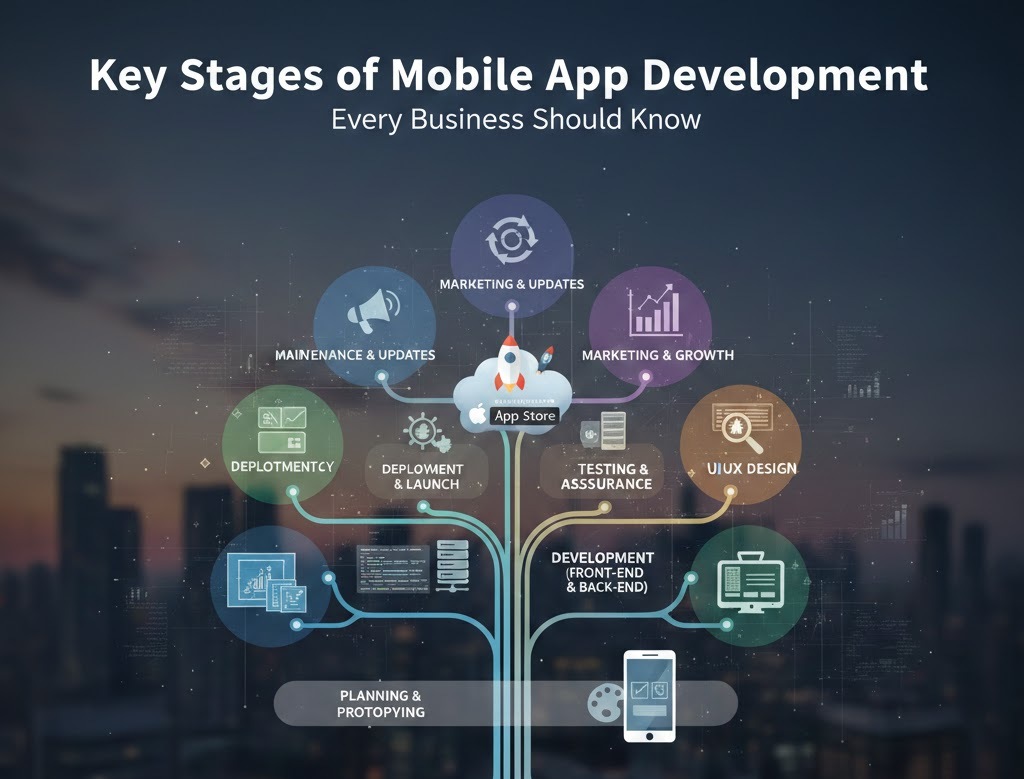
Understanding the mobile app development stages helps businesses avoid confusion, delays, and unnecessary costs. It makes the whole process easier to handle.
1. The App Idea Comes First (But It’s Never Clear)
In the beginning, the idea is usually incomplete.
Someone says, “I want an app like this.”
Someone else adds, “Let’s also include this feature.”
This is normal.
At this stage, the goal is to clean up the idea. Who will use the app? What problem does it solve? What features are actually needed right now?
The first of the mobile app development stages is all about clarity, not coding.
2. Planning the App Properly
Once the idea is clearer, planning begins.
This means deciding what screens the app will have, how users will move inside it, and how data will work in the background. Skipping this stage usually creates confusion later.
Good planning is one of the most important mobile app development stages, even though many businesses underestimate it.
3. Designing the App for Real Users
Design is not about looks. It’s about usability.
This stage focuses on how the app feels when someone uses it. Where buttons are placed, how easy navigation is, and how quickly users can complete actions.
Among all mobile app development stages, this one directly affects whether users stay or uninstall the app.
4. Development Begins
This is where actual building starts.
Developers turn designs into a working app. Screens begin to function, features are added, and the app slowly comes together. Some things work smoothly, others need fixing — that’s part of the process.
This is one of the longest mobile app development stages, and rushing it usually leads to bugs.
5. Testing the App Before Launch
Testing means using the app again and again to find problems before users do.
Slow loading, crashes, wrong actions — all of this is checked here. Testing is a critical part of the mobile app development stages because it protects the app’s quality and user experience.
6. Launching the App
Once testing is done, the app is prepared for launch.
App store rules are followed, descriptions are added, and final checks are completed. When the app goes live, it feels like a big moment — but it’s not the end.
Launch is just one of the mobile app development stages, not the final step.
7. Maintenance After Launch
After users start using the app, real feedback comes in.
Bugs appear, improvements are needed, and updates become necessary. Maintenance keeps the app running smoothly and relevant over time.
Many businesses ignore this stage, but maintenance is one of the most important mobile app development stages for long-term success.
Why Knowing These Stages Matters
Businesses that understand the mobile app development stages don’t panic. They plan better, communicate clearly, and set realistic expectations.
Instead of rushing, they focus on building something that actually works.
Final Words
Mobile app development is not magic. It’s a process.
Each stage matters, and skipping any of the mobile app development stages usually creates problems later.
When the process is handled properly, the app becomes a strong business tool instead of a constant headache.
👉 For more tips, insights, and updates, follow us on Instagram and Facebook and stay connected with everything related to mobile app development and digital growth.


