
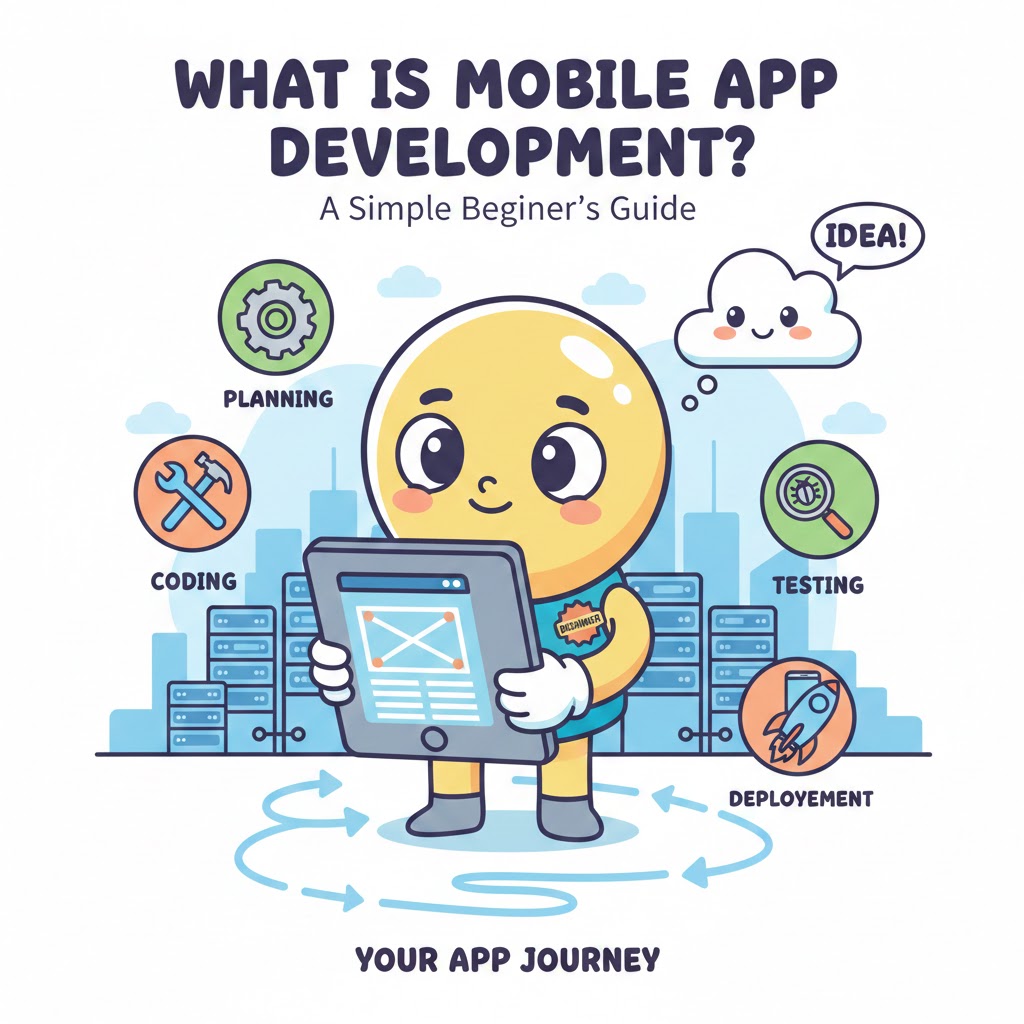
In today’s digital world, mobile apps have become a part of our everyday life. We use apps to order food, book taxis, shop online, learn new skills, and stay connected with people. Behind every useful app, there is a process called mobile app development.
If you are new to this topic and feel it sounds too technical, don’t worry. This guide explains app development in simple words, so beginners can easily understand it.
What Is Mobile App Development?
Mobile app development is the process of creating applications that work on mobile devices like smartphones and tablets. These apps are designed for operating systems such as Android and iOS.
In simple terms, mobile app development includes:
Planning the app idea
Designing how the app will look
Writing code to make it work
Testing the app
Publishing it on app stores
Every popular app you use today has gone through this development process.
Why Is App Development Important?
Mobile phones are no longer just for calling. People spend most of their time on apps, which is why app development has become so important.
It helps:
Businesses reach more customers
Users get quick and easy solutions
Startups turn ideas into real products
Developers build strong careers
Because of this growing demand, app development is one of the most valuable digital skills today.
Types of Mobile Apps You Should Know
To understand app development better, let’s look at the main types of mobile apps.
1. Native Apps
These apps are built for one specific platform.
Android apps (Java or Kotlin)
iOS apps (Swift)
They offer better performance and smooth user experience.
2. Web Apps
These apps work through a browser.
No installation needed
Look like apps but are websites
3. Hybrid Apps
Hybrid apps work on both Android and iOS.
Single codebase
Faster development
Popular in modern app development
How Does App Development Work?
Here is a simple step-by-step explanation of the app development process:
Idea & Planning – Decide what problem your app will solve
Design – Create layouts, buttons, and user flow
Development – Write the code to build the app
Testing – Fix bugs and improve performance
Launch – Publish the app on the app store
Maintenance – Update the app regularly
Each step is important to build a successful mobile app.
Skills Needed for Mobile App Development
You don’t need to be an expert to start app development. Beginners can start with basic skills and improve over time.
Some useful skills are:
Basic coding knowledge
Logical thinking
Understanding user needs
Willingness to learn
With practice, app development becomes easier and more enjoyable.
Tools and Languages Used in Mobile App Development
Some popular tools used in app development include:
Android Studio (for Android apps)
Xcode (for iOS apps)
Flutter (cross-platform)
React Native (hybrid apps)
Many beginners prefer Flutter or React Native because they make mobile app development faster and simpler.
Is Mobile App Development Hard for Beginners?
At the beginning, mobile app development may feel confusing—but that’s normal. Every developer starts from zero. By creating small apps and practicing regularly, beginners gain confidence step by step.
Learning mobile app development is not about speed, it’s about consistency.
Final Thoughts
Mobile app development is a powerful skill in today’s digital age. Whether you want to build your own app, start a career, or grow a business, learning mobile development can open many doors.
Start small, stay patient, and keep learning. With time and effort, anyone can understand and master app development 🚀 For more tips, guides, and updates on app development, follow us on Instagram and Facebook and stay connected with our latest content.


